
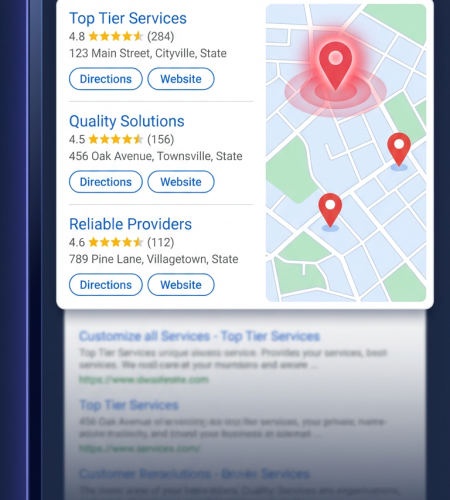
Nearly half of everything people type into Google has local intent. Three out of four of those searchers walk into a business the same day. And if you’re not in that little map box at the top? They walk into someone else’s. I’ve put together the whole local SEO for Google Maps workflow here, tool by tool, using what’s on GroupToolz.
By GroupToolz Team Updated: May 8, 2026
| 46% Google searches have local intent | 76% Visit a business within 24 hrs | 28% Local searches lead to a purchase | 60% Searches end with zero clicks |
Local SEO for Google Maps plays by different rules than regular SEO
If you’ve been doing normal SEO for a while and then try local, the first thing you notice is how little your domain authority matters. Local SEO for Google Maps is its own game. Google’s local algorithm cares about how close the searcher is to your door, whether your Google Business Profile is filled out properly, whether your name and address are the same across every directory, and how many recent reviews you have. Backlinks and domain rating? They matter, but way less than you’d think.
I’ve seen a one-dentist practice with a WordPress template website outrank a chain hospital in local results. The dentist had a perfect GBP, 120 five-star reviews from the past year, and her NAP was consistent across 30 directories. The hospital had a DA of 65 and almost no reviews since 2023. Local SEO for Google Maps doesn’t care about your budget. It cares about your signals.
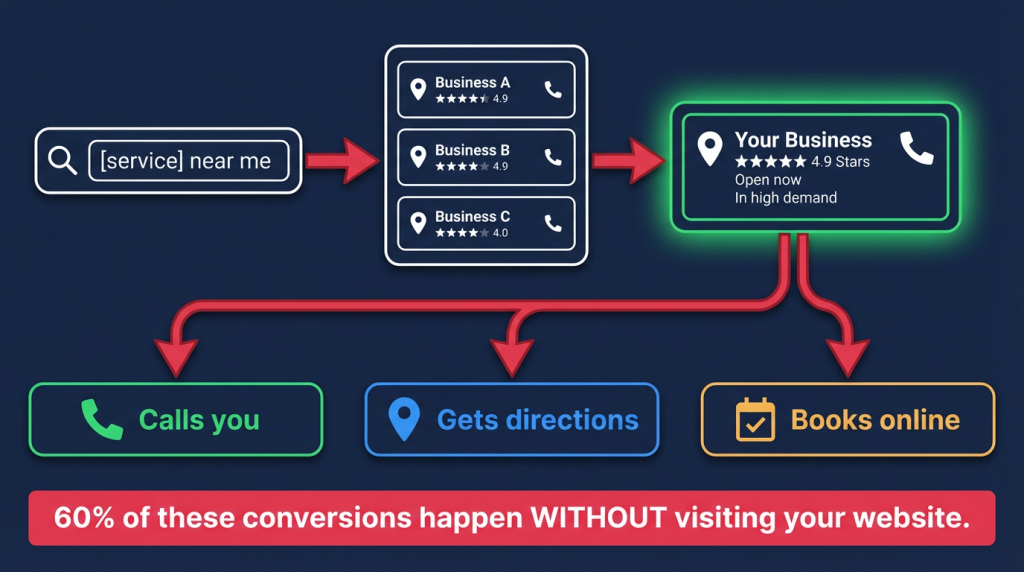
There’s also a shift happening that makes local SEO for Google Maps even more important in 2026. SEMrush’s data says 60% of searches now end without anyone clicking anything. People are calling businesses, requesting directions, and booking appointments straight from Maps. They never visit your website. If you are not in that local 3-pack, you’re not losing traffic to your website. You’re losing the phone call that was going to happen before anyone bothered to look at your website.
The 5 things Google actually weighs for local rankings
Whitespark puts out a ranking factors report every year. The 2026 edition had 47 local SEO professionals weigh in. Here is what they found, and honestly, it’s kind of comforting if you’re a small business because most of this stuff is free to fix.
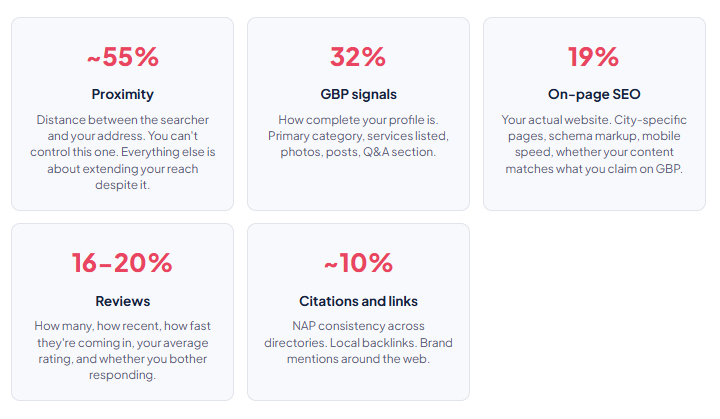
The proximity number looks discouraging at first. More than half the decision is just “who’s closer.” But you can not relocate your shop, so there’s no point worrying about it. What you can do is nail the other 45%. A business with a perfect GBP, fresh reviews every week, clean citations, and city-specific landing pages can show up for searchers who are 3-4 km away instead of only the ones walking past. That’s how local SEO for Google Maps gives small businesses a shot against bigger competitors with better locations.
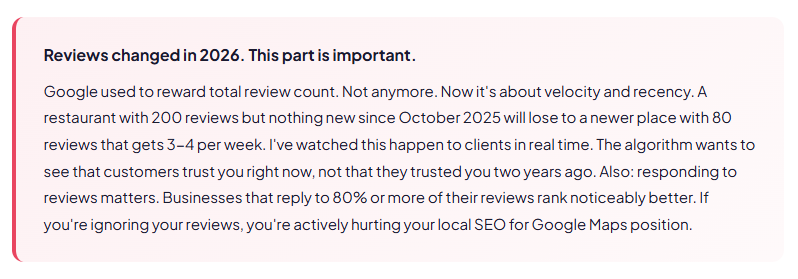
The 5-step local SEO for Google Maps workflow
| Step 1 of 5 Dig up local keywords SEMrush SpyFu Local keyword research looks different from regular research because every query has a location glued to it. “Dentist in Thane.” “Plumber near Andheri.” “Best cafe Bandra.” The pattern is always [what they need] + [where they are]. If you skip this step, you’re guessing which searches to target, and guessing rarely works for local SEO for Google Maps. Open SEMrush’s Keyword Magic Tool and type your service plus your city name. The volumes will look small compared to national keywords, and that’s normal. Local queries run lower. Filter for anything above 50 searches per month. Export the full list, including “near me” variations and People Also Ask questions. Pay attention to keywords under KD 40. Those are where a local business with solid GBP signals can realistically rank within a few months. SpyFu is useful here too. Plug in the domains of your top two or three local competitors. SpyFu shows you every keyword they rank for, including location-modified ones you probably haven’t thought of. I found a keyword this way once for a client. A competitor was ranking for “emergency tooth pain Navi Mumbai” and my client had nothing targeting that. One page later, they were getting calls from it. Local SEO for Google Maps is full of gaps like that if you look. Once you have your keyword list, map each cluster to a specific page. Homepage targets your main city. Then build separate pages for each neighbourhood or suburb you serve. One page per area, each with its own keyword cluster. This is the single most reliable on-page tactic for local businesses covering multiple locations. |
| Step 2 of 5 Make your Google Business Profile airtight GBP Dashboard ChatGPT Plus Canva Pro The Whitespark report says 8 of the top 10 local pack ranking signals come from your GBP. Eight out of ten. Nothing else even comes close. If you only have time for one thing in this entire post, do this step. Primary category is everything. “Dentist” and “Dental Clinic” are different categories in Google’s system. Pick the wrong one and you might not show up at all, no matter how good everything else is. Check what your competitors have set as their primary category (it’s visible on their listings) and match the one that fits your core service best. Add every secondary category that applies. A dental practice should add “Cosmetic Dentist,” “Orthodontist,” “Emergency Dental Service” if those are real services they offer. More categories means more queries your profile can match. Fill out the services section with real descriptions. Not keyword salad. Actual descriptions of what you do, written so a customer would read them and think “yes, that’s what I need.” ChatGPT Plus on GroupToolz can draft these quickly. Just give it your service list and city name and tell it to write for customers, not search engines. Upload photos. Lots of them. Every week if possible. Google’s own data shows that businesses with 100+ photos get 520% more calls than average. Five times more calls! Take photos of your shop front, your team, your products, happy customers (with permission). Use Canva Pro to add your branding. Geotagging helps too. About GBP posts: I know people who swear by them. The data doesn’t agree. A controlled study by Sterling Sky tracked 441 keywords over 9 weeks and found zero direct ranking movement from posts. Zero. Posts do get clicks and engagement though, so they’re not useless. Just don’t expect them to move your local SEO for Google Maps position on their own. One thing most people miss: Google has confirmed that your business description does not affect rankings. It’s not a ranking field. Write it for humans. Tell people what makes you different. Skip the keyword stuffing. |
| Step 3 of 5 Build city pages that aren’t garbage Seobility Woorank Frase.io NeuronWriter Most local businesses skip this step or do it badly. They serve Thane, Navi Mumbai, and Mumbai but have one homepage saying “serving all of Mumbai.” Then they wonder why they’re invisible in Thane. Each area you serve needs its own page with its own content. Copy-pasting the same text and swapping the city name doesn’t work either. Google catches that. Before building new pages, run your existing site through Seobility. Check for broken links, missing meta tags, slow load times, and mobile issues. More than 60% of local searches come from phones, so if your site is sluggish on mobile, you’re losing people before they even see your content. Use Woorank if you want a quick branded audit report you can show a client or your team. For the city pages themselves, use Frase.io to study what’s ranking for your target keyword in each location. What topics do the top pages cover? What questions do they answer? Then build your page to cover those same topics, using NeuronWriter to check that you’re hitting the right semantic terms. Include your full NAP with LocalBusiness schema, mention actual local landmarks or areas, and embed a Google Maps pin. Each page should feel like it was written for someone in that specific neighbourhood, because it was. Add FAQ schema to pages where you answer common customer questions. The structured data connects your website to your GBP in Google’s systems and can get you into AI Overviews for local queries. This part of local SEO for Google Maps is getting more important as Google keeps expanding AI-generated answers. |
| Step 4 of 5 Clean up citations, then build a review machine Moz Pro BuzzStream ChatGPT Plus Citations are every place on the internet where your business name, address, and phone number appear together. The problem isn’t having too few citations. The problem is having inconsistent ones. If your Google listing says “Dr. Patel’s Dental Clinic” but JustDial says “Dr Patel Dental” and Sulekha says “Patel Dental Care,” Google sees three different businesses. Or worse, it sees one business that can’t keep its own name straight. Either way, your trust score drops. Moz Pro has a Local feature that scans directories and flags inconsistencies. Run it. Fix everything. Your name, address, and phone number should be character-for-character identical everywhere: website, GBP, JustDial, Sulekha, IndiaMART, Facebook, Instagram, Apple Maps. Everywhere. After citations are clean, list yourself on every directory that makes sense for your industry. Healthcare? Practo. Food? Zomato. Real estate? MagicBricks. B2B? TradeIndia. Services? UrbanClap. Each listing is a citation, and they add up. BuzzStream on GroupToolz helps with outreach if you want local backlinks from news sites or community blogs. Now, reviews. This is where most businesses either do nothing or panic and buy fake ones. Don’t buy fake reviews. Google’s detection got significantly better in 2026 and the penalty is removal from Maps entirely. Not a ranking drop. Removal. Instead, build review requests into your normal customer workflow. Ask right after you’ve delivered the service, when satisfaction is highest. Not two weeks later when they’ve forgotten. ChatGPT Plus can draft personalised review request messages and email templates for you. And when reviews come in, respond to every single one within 24 hours. Positive or negative. The 80%+ response rate correlation with ranking improvement is one of the most consistent findings in local SEO for Google Maps research. |
| Step 5 of 5 Track where you actually show up (it’s more complicated than you think) Serpstat SimilarWeb Woorank Here’s the thing about local rankings that confused me when I started: they change based on where the person searching is standing. Your business can rank #1 for someone 500 metres away and not even appear for someone 5 km out. Regular rank tracking doesn’t capture this nuance, which is why you need a tool that specifically monitors local pack positions. Set up Serpstat to track your target local keywords. It flags when you appear in the local pack versus just the organic results (two different things). Check it weekly. If you drop out of the local pack for any keyword, look at citations first (something probably changed or got inconsistent) and then check if a competitor started getting more reviews than you. SimilarWeb is good for the bigger picture. Track your ratio of direct traffic (people typing your business name) against organic traffic (people finding you via search). When both numbers grow together, your local SEO for Google Maps work is doing what it should: building actual brand awareness in your area, not just search visibility. For client work, Woorank generates branded PDF audit reports. Schedule one monthly. Track GBP views, calls from your listing, direction requests, website clicks from GBP, local pack position for each target keyword, review count, average rating, and citation consistency. That’s your monthly local SEO for Google Maps scorecard. |
What these local SEO tools cost at retail (and what they cost on GroupToolz)
| Tool | What you use it for | GroupToolz plan | Retail price/month |
|---|---|---|---|
| SEMrush | Local keyword research, competitor spying | Pro Rs 449 | Rs 11,650 |
| SpyFu | Competitor keyword gaps | Pro Rs 449 | Rs 6,498 |
| Moz Pro | Citation audit, local link data | Pro Rs 449 | Rs 8,244 |
| Seobility | Technical and mobile site audit | Pro Rs 449 | Rs 1,665 |
| Woorank | Quick audits, branded PDF reports | Pro Rs 449 | Rs 1,665 |
| Frase.io | SERP analysis for city pages | Pro Rs 449 | Rs 3,748 |
| NeuronWriter | Content scoring for local pages | Pro Rs 449 | Rs 1,582 |
| ChatGPT Plus | GBP writing, review responses, page drafts | Pro Rs 449 | Rs 1,665 |
| Canva Pro | GBP photos, branded social graphics | Starter Rs 199 | Rs 1,249 |
| Serpstat | Local rank tracking | Ultimate Rs 699 | Rs 5,747 |
| BuzzStream | Local link outreach, citation building | Ultimate Rs 699 | Rs 2,080 |
| SimilarWeb | Traffic trends, brand awareness signals | Pro Rs 449 | Rs 1,665 |
| All 12 at retail | Rs 47,458/mo | ||
| GroupToolz Pro (10 of 12) | Rs 449/mo | ||
| GroupToolz Ultimate (all 12) | Rs 699/mo |
Something worth thinking about
Local SEO agencies in India charge Rs 15,000 to Rs 50,000 per month per client. The tools those agencies use would cost Rs 47,458 monthly at retail prices. On GroupToolz, the full stack costs Rs 449-699. Whether you’re doing your own local SEO for Google Maps or handling it for clients, the tool cost goes from being a barrier to being a rounding error.
Different industries, different priorities
Not all local businesses should focus on the same things. A machine learning study by Search Atlas looked at 7,718 businesses and found that ranking factor weights shift depending on the industry. This is worth checking before you decide where to spend your time.
| Industry | Proximity | Reviews | GBP | On-page | What to focus on |
|---|---|---|---|---|---|
| Restaurants | 30% | 14% | High | Medium | Photos (seriously, food photos matter), menu updates, review volume |
| Healthcare and dental | 25% | 33% | High | High | Reviews are a third of the score. Patient trust runs the show. |
| Plumbers, electricians, HVAC | 42% | 20% | Medium | Medium | Proximity is heavy here. Build city pages for every area you serve. |
| Lawyers | 20% | 25% | Medium | High | Website authority and trust signals. Content quality matters a lot. |
| Retail shops | 35% | 15% | High | Medium | Product photos, inventory freshness, foot traffic signals |
| Coaching and education | 25% | 28% | Medium | High | Reviews plus detailed course and service pages |
If you run a dental practice, put most of your effort into reviews. A third of your ranking score comes from them. If you’re a plumber, build those city pages for every neighbourhood because proximity dependency at 42% means you need to extend your reach. This table saved me from giving the same advice to every client, and it should do the same for you.
Mistakes I keep seeing (and I mean constantly)
Wrong primary GBP category. Watched a client wonder for three months why they weren’t in the local pack. Turned out they had “Medical Center” as their primary category instead of “Dentist.” Changed it. Ranked within a week. If your category doesn’t match the searcher’s query, Google filters you out before anything else even gets considered.
NAP that doesn’t match anywhere. “Dr. Patel’s Dental Clinic” on Google. “Dr Patel Dental” on JustDial. “Patel Dental Care” on Sulekha. Google sees that and thinks: which one is real? Answer: none of them get full credit. Pick one name. One address format. One phone number. Enforce it everywhere. This is a fixable problem that tanks local SEO for Google Maps rankings more often than people realise.
Celebrating 100 reviews and then stopping. Congratulations on hitting triple digits. Now watch a competitor with 60 reviews and a steady weekly flow pass you. The 2026 algorithm rewards freshness. Stopping your review process after a milestone is one of the most common ways businesses lose their local pack spot.
One homepage for three cities. “Serving Mumbai, Thane, and Navi Mumbai.” Cool. You’re invisible in two of those. Each location needs its own page. Real content. Not copy-paste with the city name swapped.
Stuffing keywords into your GBP business name. “Patel Dental Best Dentist Thane Affordable Root Canal.” This violates Google’s guidelines. The penalty is suspension. Your business name on GBP has to match your real name. Exactly.
Ignoring reviews entirely. No responses to positive reviews. No responses to negative ones. To Google, this says “nobody is home.” To customers, it says the same thing. An 80%+ response rate correlates with better local SEO for Google Maps rankings. Not responding is actively leaving performance on the table.
Every local SEO tool. One subscription.
SEMrush, Moz Pro, Serpstat, Seobility, Frase.io, ChatGPT Plus, Canva Pro, and 140 more. From Rs 449/month.
Questions people ask me about local SEO for Google Maps
What’s the biggest ranking factor for local SEO?
Proximity. About 55% of the decision according to the Whitespark 2026 report. But you can not move your building. Among the things you actually control, GBP completeness (32%) and reviews (16-20%) have the most impact. Get those right first.
Which GroupToolz tools do I need for local SEO for Google Maps?
SEMrush for keyword research. Moz Pro for citation audits. Seobility for site audits. Frase.io and NeuronWriter for city page content. ChatGPT Plus for GBP writing and review responses. Canva Pro for photos. Serpstat for rank tracking. BuzzStream for local link outreach. The Pro plan at Rs 449 covers most of them. Ultimate at Rs 699 adds Serpstat and BuzzStream.
How long until I see results from local SEO?
Depends on competition in your area. In a moderately competitive market, a properly filled-out GBP with clean citations and 20+ reviews can hit the local pack in 30 to 90 days. Category changes sometimes move rankings in days. Review velocity improvements usually take 2 to 3 months to show consistent effects.
Do Google Business Profile posts actually help rankings?
The data says no. Sterling Sky tracked 441 keywords over 9 weeks. Zero ranking movement from posts. They do get clicks though, and they make your listing look active, so I still recommend posting weekly. Just don’t count on posts to fix a ranking problem.
How many reviews do I need to get into the local pack?
There is no magic number. What Google cares about now is velocity: are reviews coming in steadily? A business with 80 reviews and 3 new ones per week outranks a business with 200 reviews and nothing recent. Aim for 2-3 fresh reviews per week and respond to every one.
I don’t have a physical shop. Can I still rank locally?
Yes. Service-area businesses like plumbers and cleaners can use a verified home address (hidden from the public listing) or a virtual office. Google still ranks you based on where that address is, but you won’t appear on Maps with a visible location. Focus extra hard on review velocity, GBP completeness, and building city-specific landing pages for each area you cover.
Can I use GroupToolz tools for client local SEO work?
Yes. GroupToolz Pro at Rs 449 has SEMrush, Moz Pro, Seobility, Woorank, Frase.io, NeuronWriter, ChatGPT Plus, and Canva Pro. That’s everything you need for client local SEO for Google Maps delivery. Add Ultimate at Rs 699 if you want Serpstat for rank tracking and BuzzStream for outreach. Agencies charging clients Rs 15-50K per month can run every tool they need for Rs 449-699 total.
More SEO guides
GroupToolz Entertainment & Learning Bundle — Netflix, Coursera, Spotify & More at ₹699
Google AI Overview Optimization: How to Get Your Content Cited Using GroupToolz (2026)
How to Run a Technical SEO Audit Without Paying ₹10,000/Month (GroupToolz Method)
Want more local SEO guides? Browse all GroupToolz blog posts
Comments